
Sence Valley Forest Park
Grid ref: SK 400 115 (OS Landranger 128 & 129)

Location/Access
Sence Valley Forest Park borders three villages, Ibstock, Heather and Ravenstone. The main access is between Ibstock and Ravenstone off the A447 on Ibstock Road; signposts for the main car park are clearly visible, there are two car parks available. The first stands on the ground at the top of the bank at SK 4033 1128 (nearest post code LE67 6NW) – this car park also has public toilets, and the second car park is at the bottom of the bank SK 4004 1126, with easier access for those with disabilities. The main car park is also the best place to park for the nearby Kelham Bridge LRWT reserve.
Site history and habitats
The park was established in 1995, when the Leicestershire County Council started restoring the site after years of coal and clay working. The site was then handed over to Forestry England. Over the next few years, the site was transformed from an opencast mine to a park with easy access walkways, lakes, open grassland, and a wader scrape. On top of this an estimated 98,000 trees were planted, with a mixture of deciduous and evergreen. Thus creating a centrepiece in the ever-growing National Forest.
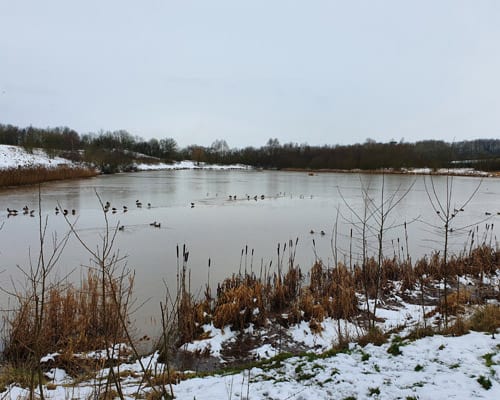
Fast forward 26 years and the basics are still to be enjoyed, minus the wader scrape. The site as of today is a mass of well-established woodland, all bordering the four main water bodies, Stonebridge Pool, Horseshoe Lake, Goss Water, and Usborne’s Pool, the latter more suited these days to Odonata, not forgetting the River Sence which runs straight through the heart of the site. During the winter of 2020 two new areas were purchased, one to the west and another just to the north, all joined together with the existing site. These areas are all newly planted and have in turn created a vast area of rough grassland.
Birds
During the winter varying flocks of Siskin and Lesser Redpoll can be seen feeding in the plentiful Alder trees around the site. Also at this time of the year the water bodies around the site hold decent numbers of wildfowl, especially Horseshoe Lake, and Water Rails can be heard calling from the small areas of reedbeds. It is also worth looking at the surrounding arable fields as a small number of Lapwing and Golden Plover use the area to feed. With the new area of grassland it is worth keeping in mind that Short-eared Owls and other raptors could find the area of use for feeding.
As we go through spring the Cetti’s Warblers that have recently colonised the area start to become very vocal; other breeding warblers start to make their presence known, Chiffchaff, Willow Warbler and Common Whitethroat and, if you are lucky, a reeling Grasshopper Warbler. Most woodland birds can now be found to be flourishing in the area. The new grassland area will attract passage Wheatear and Whinchat, and a plentiful number of Skylarks which will be busy singing, Yellow Wagtails will also start looking for a suitable place to breed. In recent years it seems that the Willow Tits from nearby Kelham Bridge have spread into the site, and these can be heard calling, especially around Stonebridge Pool.
Summer can be quiet as birds are busy feeding young. The list of warblers mentioned earlier should all be breeding within the park, and the lakes become a creche for ducklings.
Autumn can be a good time for birding in the park: Wheatear and Whinchat are frequent on return passage, as are Redstarts, but the latter are usually just in singles. Many young warblers are now out of the nest and feeding within the park. Wader passage at the site has sadly declined over the years, mainly due to both wader scrapes drying up, but a little mud can be found along the edge of Horseshoe Lake and this can turn up Green and Common Sandpiper from time to time. Over recent years visual migration watches have taken place, as birds seem to be funnelled down the valley. Good numbers of passage Chaffinch and winter thrushes are noted frequently, along with less frequent birds like Crossbill, Brambling and Hawfinch.
Since its opening, the park has had its fair share of scarce/rarities: Ferruginous Duck, Garganey, White-fronted Goose, Smew, Great Skua, Temminck’s Stint, Red-necked Phalarope, Pectoral Sandpiper, Curlew Sandpiper, Wood Sandpiper, Merlin, Hen Harrier, Marsh Harrier, Little Gull, Black Tern, Quail, Yellow-browed Warbler, Common and Arctic Redpoll and Lapland Bunting have all been recorded.
Rhys Dandy
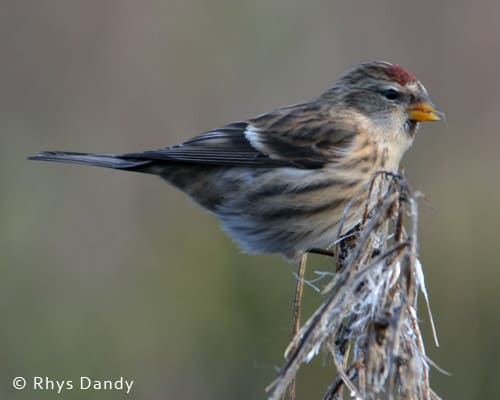
Lesser Redpoll
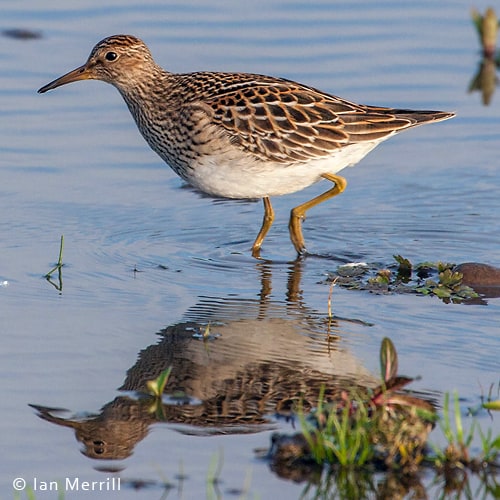
Pectoral Sandpiper