
Longmoor Lake
Grid ref: SK 390 128 (OS Landranger 128)
Location/Access
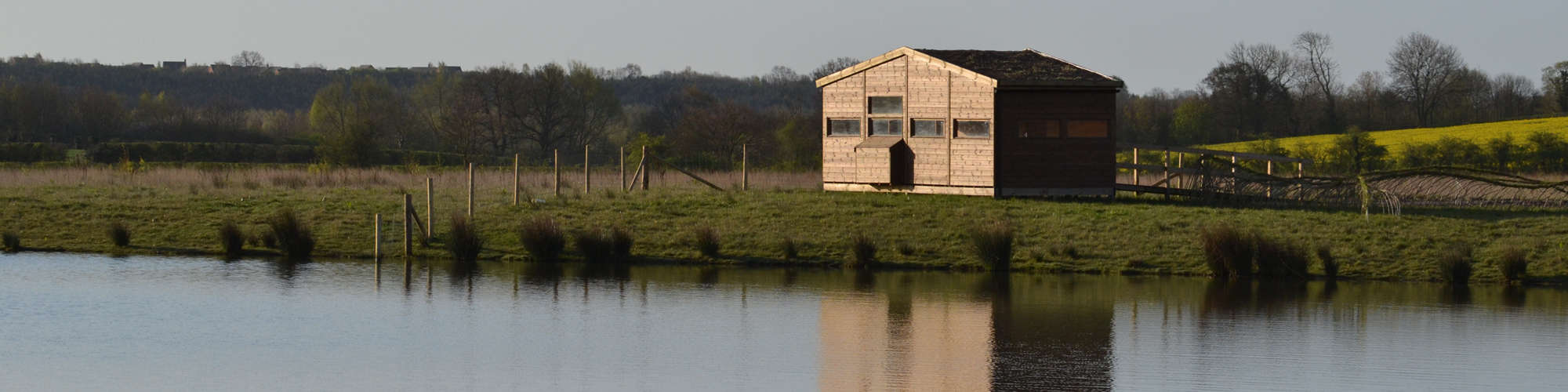
The site, officially called Queen Elizabeth Diamond Jubilee Wood, is situated between the villages of Heather, Normanton le Heath and Ravenstone, around a mile west of Sence Valley Forest Park. Access is easiest just under a mile north-west of Heather as you head towards the small village of Normanton le Heath along Heather Lane, where there is a large car park at SK 3836 1201 (nearest post code LE67 2TJ). From the car park there are several permissive paths across the whole site; some paths are wide and stoned, while the rest are grassed and rough in places. There is an information point nearby with details about the site along with a bird hide that does have wheelchair access.
Site history and habitats
As is the trend in NW Leicestershire, this site lies on a former opencast mine that has been transformed back into its natural state. The site is 459 acres in size and has around 300,000 broadleaf trees planted within its boundary. As the name suggests it was formed and opened in 2012 to mark the Queen’s Diamond Jubilee and officially opened by Princess Anne. Amongst the many trees on site, you can still find several areas of rough grassland, many large existing Hawthorn hedges, and a decent sized lake. Also viewable from within the site are several grass and arable fields.
Wheatear
Birds
During the winter months, several species of wildfowl can be found on the lake, including Tufted Duck, Pochard, Wigeon and Shoveler. Along the edge of the lake is a good place to look out for Lapwing and Common Snipe, and there is also a good population of Little Grebe present. Through the winter the ever-maturing Alder and Silver Birch hold good-sized mixed finch flocks, within which Lesser Redpoll, Siskin and Goldfinch can be found. The grassland that is left on the site provides feeding habitat for Skylark, Meadow Pipit and Stonechat. Nearby hedges also provide a sheltering spot for small groups of Yellowhammer, Reed Bunting and Bullfinch.
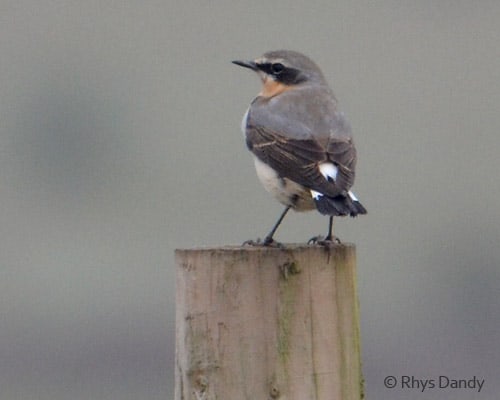
As spring arrives, the site becomes a haven for passage migrants; these include Wheatear on the short, grassed areas and Whinchat feeding from the many protectors that are around the smaller trees on site. Warblers start to make their presence known, Common and Lesser Whitethroats can be heard singing, along with Willow Warbler and Chiffchaff. Grasshopper Warbler has been heard reeling in some of the rough patches around the site too. Waders do sometimes drop onto the edge of the lake, especially Common Sandpiper and the occasional Dunlin.
During the summer months many of the aforementioned warblers are busy feeding young, and the lake plays host to many ducklings. Oystercatcher and Black-headed Gulls have bred here in the past, but currently the platform is no longer in the water.
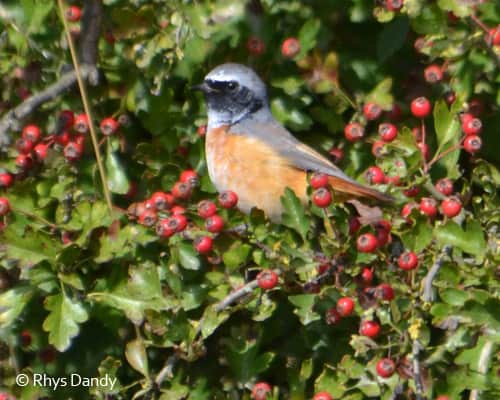
Autumn can be advantageous around the site: Wheatear return along with Whinchat, and the site has over the years been reliable for Redstart, with multiples recorded some days. They tend to make the most of the large Hawthorns, and again waders can sporadically drop into the lake.
Uncommon species continue to grace the site in its infancy years, these have included Ring-necked Duck, White-fronted Goose, Marsh Harrier, Merlin, Short-eared Owl, Spotted Redshank, Turnstone, Arctic Tern, Ring Ouzel, Rock Pipit, Common Redpoll and Snow Bunting.
Rhys Dandy
Redstart

Snow Bunting