
Stanford Reservoir
Grid Ref: SP 605808 (OS Landranger 140)
Location/Access
Stanford Reservoir is situated on the upper reaches of the ‘Warwickshire’ Avon and lies on the county boundary between Leicestershire and Northamptonshire (see map for exact boundary). The reservoir was built in 1928 and is owned by Severn Trent Water. It lies on an imaginary line drawn between the Wash and the Severn, a proven ‘flyway’ for migrating birds across the centre of England.
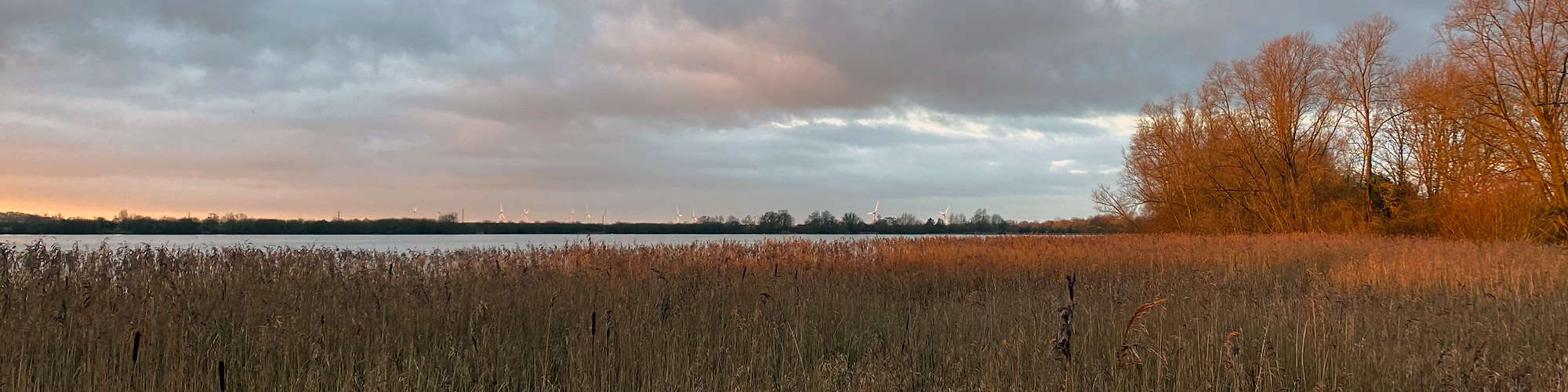
Stanford Reservoir has a diversity of habitats surrounding the reservoir. These include two Phragmites reedbeds, a disused railway track, adjacent broadleaved woodland and a variety of arable farmland. The dam attracts its share of birds too, with migrating terns, waders and passerines often found there at key times of the year.
Access is by annual permit only. These can be obtained from Severn Trent, Draycote Water Rangers Office, Kites Hardwick, Rugby CV23 8AB at a cost of £15pa (correct as at 2020). Or email: StanfordVisitorExperience@severntrent.co.uk
No dogs are allowed at the site. The permit gives access to two carparks – one at the Welford Road (or inflow) end and the other at the dam.
Birds
Every month has the potential to deliver interesting birds. The winter months hold reasonable numbers of wildfowl including Pochard, Tufted Duck, Wigeon, Coot and the occasional scarcity. Over the past ten years Scaup, Common Scoter, Smew, Long-tailed Duck, Great Northern and Black-throated Diver, Black-necked Grebe, Whooper and Bewick’s Swan and Pink-footed Goose have all been recorded. There is also a reasonable sized gull roost from November onwards with 11 species of gull recorded in 2020. Bearded Tit has visited the site in 2020, the first time in 40 years. Wintering Hen Harrier, Merlin and Short-eared Owl have been recorded several times in the last few years.
Spring can often deliver a passage of Black and Arctic Terns. Also, Sandwich and Little Tern are always a possibility and the site is regular passage route for Little Gulls. The nationally rare Caspian Tern was recorded twice in 2020.
Whilst water levels are generally high, waders still pass through the site and any muddy areas and the dam should be checked regularly. Greenshank, Redshank, Little Ringed Plover, Ringed Plover, Whimbrel, Dunlin, Wood Sandpiper, Sanderling and Black-tailed Godwit have all been recorded on the dam in the last few years. In years where the water level drops exposing mud, the spring and autumn wader passage can be very lucrative indeed. In 2017 both Black-winged Stilt and Baird’s Sandpiper were recorded, along with good numbers of Black-tailed and Bar-tailed Godwits, Turnstone, Ringed Plover and Sanderling.
Spring and into summer is also a good time for breeding passerines. Sedge and Reed Warblers can be seen in good numbers as can Willow Warbler, Chiffchaff, Garden Warbler, Lesser Whitethroat, Common Whitethroat and the occasional Grasshopper Warbler. Cetti’s Warbler can be heard at any time during the year. Cuckoo is still a regular visitor with Hobby, Osprey and more recently Marsh Harrier, possible at any time through the spring, summer and into autumn.
Ornithological History
The site has played host to a number of Leicestershire county firsts including: Caspian Tern, Whiskered Tern, Wilson’s Phalarope, Franklin’s Gull and Icterine Warbler. In addition, a number of other rarer species for the county have included Baird’s Sandpiper, Pectoral Sandpiper, Alpine Swift, Lesser Yellowlegs, Roseate Tern, White-winged Black Tern, Firecrest, Bearded Tit and Hen Harrier.
The Stanford Ringing Group have been active at the site for over 40 years. Whilst much of the ringing is done on the Northamptonshire side of the reservoir, the group do also operate at certain times of the year in the Leicestershire reedbed and the area between there and Welford Road carpark (see www.stanfordrg.org.uk).
Chris Hubbard

Bearded Tit