
Eyebrook Reservoir
Grid ref: SP 855 955 (OS landranger 141)
Location/Access
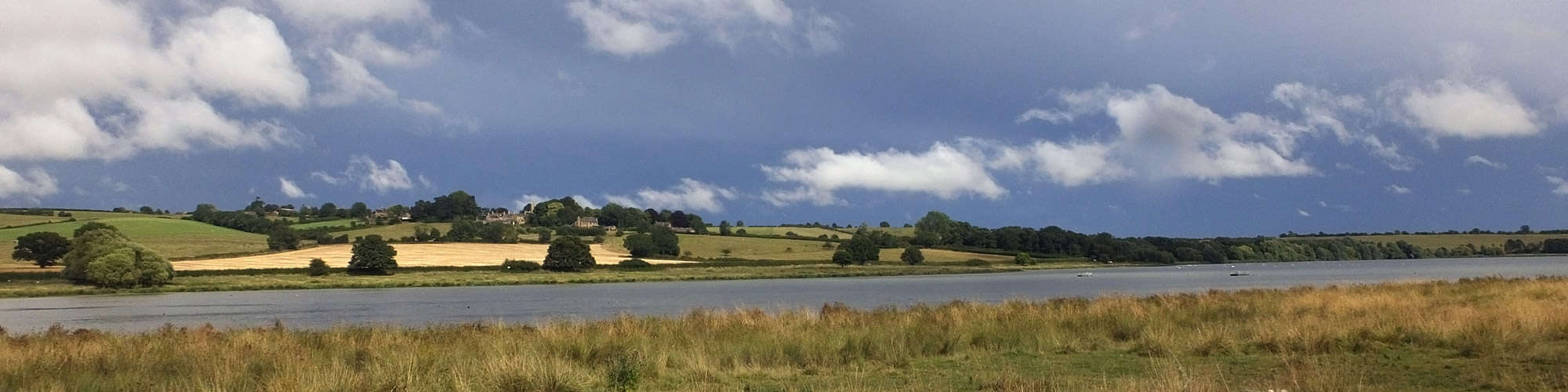
The reservoir lies on the boundary between Leicestershire and Rutland, two miles south of Uppingham.
Take the A6003 south out of Uppingham, then turn right onto the minor road to Stoke Dry after a mile and a half. This road continues down the hill and round the north-west half of the reservoir.
Park carefully anywhere along the road, taking care not to block field gateways or obstruct other traffic. The Rutland side of the inflow from the small car park at the bottom of the hill from Stoke Dry as far as the bridge at the inflow, is all easily viewable from the road.
The Leicestershire side can currently be viewed from anywhere along the road, as the hedge has recently been laid, although it is already starting to get too high in places along the southern half of the reservoir. In additon there are viewing ‘bunkers’ overlooking the inflow and the south side of the ‘island’ (see map), which is no longer an island, but continues to be called that. Note that the verges can get extremely muddy after wet weather, especially in winter, so be sure that you can get your car off again before parking – cars stuck in the mud are a frequent occurrence!
LROS members were formerly allowed access to the reservoir grounds, but the new fishery management has sadly withdrawn from this agreement, and the grounds and plantation are all now strictly private.
Birds
The water level fluctuates a lot, but the (northern) inflow end usually has at least muddy edges, and sometimes a much larger expanse of mud which is attractive to waders. Autumn passage can produce a few Little Stints, Curlew Sandpipers and Spotted Redshank in addition to the commoner species. The inflow is also frequented by loafing gulls and dabbling ducks, in particular Wigeon and Teal, and Garganey in both spring and autumn. Whooper Swans sometimes turn up on autumn passage or in the winter, but Bewick’s Swans are much less frequent than formerly.
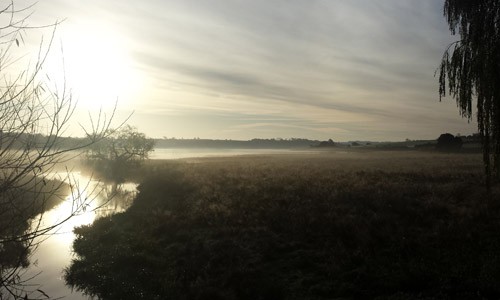
The area off the Stoke Dry car park is the favoured spot for Smew in winter, although they can be found anywhere around the reservoir. Birds regularly move between here and Rutland Water, and these are now the best sites in the UK for this handsome little duck, with anything up to 20 birds recorded in a good winter, although numbers vary from day to day.
Often ignored by birders, the large flocks of Greylag and Canada Geese are always worth looking through carefully in the winter, as they have attracted wild Pink-footed, White-fronted and even Tundra Bean Geese on occasions.
Little Egrets are common now, and have recently been joined by one or Great White Egrets. Cattle Egret remains a rarity, but there have been several records now and we can expect more in the future.
Raptors which may be seen include Buzzards over nearby Stoke Dry Wood, Hobby and Ospreys, which are regular on spring and autumn passage. Barn Owls may be seen hunting around the reservoir margins and surrounding fields, and Little Owls still hang on in the fields on the Rutland side of the inflow.
Terns appear on spring and autumn passage, including Common, Black and Arctic, with occasional Sandwich or Little Terns. Common Terns also breed on the tern raft at the inflow end. The grassy edges are particularly attractive to migrant wagtails, pipits and Wheatears in spring – one of the best areas is the south-west corner of the reservoir between the road and the dam. Stonechats are regular around the inflow in winter, and Whinchats on spring and autumn passage. There are several feeeding stations around the reservoir, in the car park, at the bridge and just inside the Alec Lane gate (see map) – this last one usually has a few Tree Sparrows present during the winter months. Watch from the gate only.
The winter gull roost has been smaller in recent years than it once was, but is best watched from the bunker just south of the ‘island’ – Mediterranean and Yellow-legged Gulls are regular, with Iceland, Glaucous and more recently Caspian Gulls recorded annually. The deep water at the dam attracts diving ducks, as well as scarcer visitors such as divers, sea ducks or rare grebes.
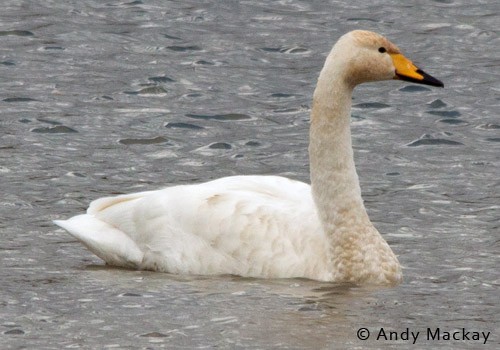
Whooper Swan
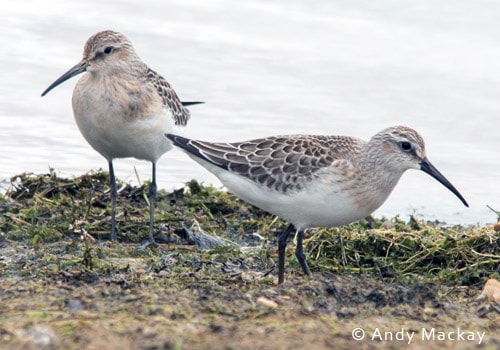
Curlew Sandpipers
Rarities
A good number of national and local rarities have been recorded over the years, including: Leach’s Petrel, Gannet, Cattle Egret, Squacco Heron, Night Heron, Spoonbill, American Wigeon, Green-winged Teal, Blue-winged Teal, Ring-necked Duck, Lesser Scaup, Ferruginous Duck, Montagu’s Harrier, Black-winged Pratincole, Kentish Plover, Killdeer, Dotterel, American Golden Plover, Baird’s Sandpiper, Pectoral Sandpiper, Spotted Sandpiper, Red-necked & Grey Phalaropes, Great, Arctic & Pomarine Skuas, Caspian Tern, Whiskered Tern, White-winged Black Tern, Puffin, Rock and Water Pipits, Shore Lark and Citrine Wagtail.
Andy Mackay
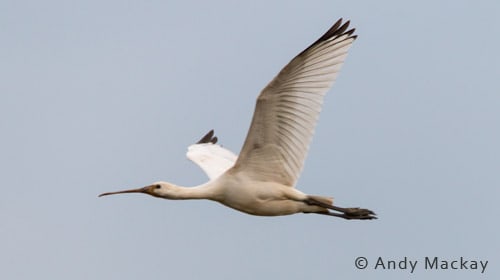
Spoonbill