
Swithland Reservoir
Grid ref: SK 558 140 (OS Landranger 129)
Location/Access
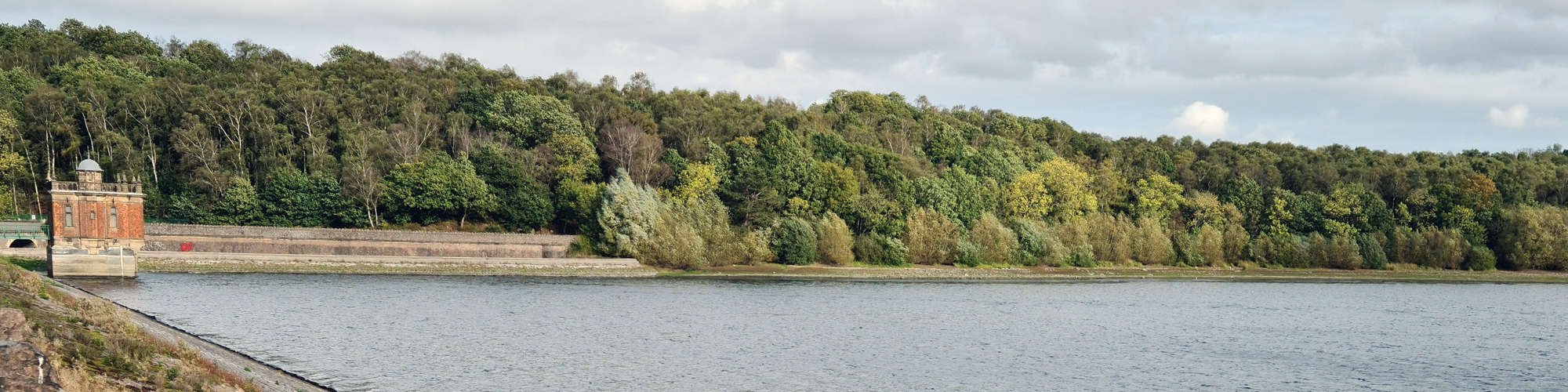
The reservoir lies just south of Quorn, and is about a mile long by half a mile wide. The Great Central Railway divides the reservoir into two; the northern section is the larger. There is no access to the reservoir margins, but both sections are easily viewed from public roads. The southern section can be watched from the The Ridings, a minor road running between Swithland and Rothley: park on the bridge at SK 562 132. To reach the north side from here, head towards Rothley for half a mile, then turn left at the crossroads. Follow this road until a left turn onto Kinchley Lane. This rather narrow road follows the eastern shore of the reservoir and eventually turns onto the dam, where there is ample parking except on sunny Sundays. Take care driving along the lane, as it is winding and narrow and gets busy with walkers, cyclists and horse riders. There is a significant problem with various forms of anti-social behaviour along Kinchley Lane and the dam, including reckless driving.
The site is poorly served by public transport and the nearest regular bus routes are in Quorn and Rothley.
Birds
The main interest centres on waterbirds. Wildfowl numbers are very variable but winter normally sees decent numbers of Tufted Duck, Goldeneye, Wigeon, Teal and Gadwall, with smaller numbers of Pochard and Shoveler; occasional Smew, Goosander, Scaup and Pintail are seen most winters. Less predictable species include Garganey in spring or autumn, almost always on the southern section, and Common Scoter, possible at any time of year. Large numbers of Greylag and Canada Geese visit the reservoir, mainly in the autumn, and may include odd Pink-footed Geese occasionally. Cormorants can get well into three figures, and the site is becoming a regular one for double-figure counts of Little Egrets and up to four Great White Egrets. Great Crested Grebe numbers are much smaller than in the past; Little Grebes are surprisingly scarce, and the rarer species of grebes are just occasionally seen, with Black-necked the most regular.
Swithland is one of the best sites in the county for seeing large numbers of Mandarins. They are best seen at dawn or dusk when they emerge from the fringing trees along the west side of the southern section and the south side of the central Brazil Island. Numbers in 2020 reached 50 on a few occasions.
There used to be a large mixed gull roost when there was a nearby refuse site but nowadays gulls do not normally roost on site. The main species observed now is Black-headed Gull.
Swithland Reservoir is the most reliable place in the county to see Peregrines in the winter: most days one or two sit in a prominent oak tree on the skyline of Buddon Wood, viewable from the dam, for much of the day.
Wader passage is always disappointing as the water level is usually high and most of any exposed shoreline is rocky. Common Sandpiper, Little Ringed Plover and Dunlin are the only species anything like regular but anything could turn up of course.
Sadly both Lesser Spotted Woodpecker and Willow Tit have gone from being regular and not uncommon along Kinchley Lane and along the southern road twenty years ago to being non-existent now. Marsh Tit is going the same way. Despite looking to be in good condition the local woodlands seem to hold very small numbers of birds.
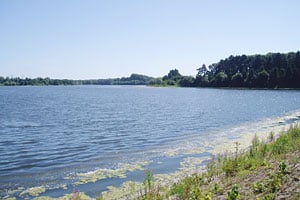
North section © Jim Graham
Rarities
Swithland has built up a good list of rarities over the years due to the efforts of a small number of regular observers. Some truly exceptional birds have been seen, such as Killdeer (1975) and Crag Martin (1999). Highlights in the last 20 years include Bonaparte’s Gull (2017), two Lesser Scaups (2006, 2008), Ferruginous Duck (2002) and two Red-rumped Swallows (2003, 2004). County rarities in the same period include all three divers, Leach’s Petrel, Gannet, Shag, Velvet Scoter, Long-tailed Duck, Temminck’s Stint, both Grey and Red-necked Phalaropes, Great Skua, Iceland Gull, Golden Oriole and Hooded Crow.
Steve Lister